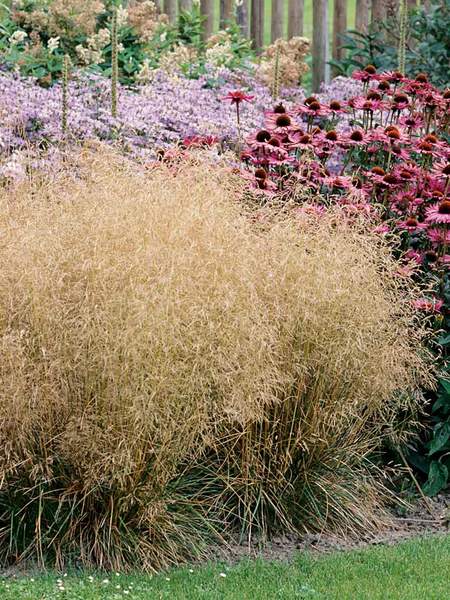
This guide covers how to plant and grow tufted hair grass, which differs from many drought-resistant prairie grasses. This grass has dark green leaves with cloud-like green to gold inflorescence in summer that turns to light golden straw color that lasts into winter. Clumped, densely tufted mass of fine, narrow leaves that are upright and open with fine texture. It will grow in full sun but reduces the quality of foliage and flower. Plant tufted hair grass in USDA Hardiness Zones 4 to 8. Use it in garden beds, containers, and naturalized areas.
Plants from Appalachia
Plants are very resilient and will rebound quickly when cared for correctly. Nassella tenuissima does well when planted from seed if you start your seeds indoors in the early spring. Place on a layer of potting mix, then cover with a thin layer of the same potting mix, soil, or sand. CarePrefers moist soil and shade from afternoon sun.
Your Green Thumb Support
24 Ornamental Grasses for Adding Texture to Your Garden - Better Homes & Gardens
24 Ornamental Grasses for Adding Texture to Your Garden.
Posted: Thu, 25 Apr 2024 03:33:45 GMT [source]
Still, annuals produce tons of seeds that can infest and dominate your yard under the right conditions. Mexican feather grass doesn't need pruning, but you may want to trim away dead flowers and overgrown stems at the end of the season, as you tidy them up for dormancy. Use a clean, sharp garden shears and clear away the debris, so the detritus doesn't accidentally reseed. Many of the ornamental grasses are suited for dry, sunny locations. Gardeners with predominantly shady locations that yearn for the movement and sound of grasses may have trouble finding suitable specimens. Tufted hairgrass, however, is perfectly suited for such locations.
Recent Plants
Mexican feather grass isn't a great lover of hot summery weather. It doesn't die out, but it tends to lose color in the warmest, most humid months. Mexican feather grass is winter hardy, tolerating cold temperatures to about 0 degrees Fahrenheit; however, any colder than that for a sustained amount of time will kill the grass. Check with your local county extension before planting it to see if it is invasive in your region.
The variegated blades turn from creamy white in summer to pink as the weather cools in fall. Sometimes, foliage alone adds height, shapes or textures to your garden. Northern Lights Tufted Hairgrass adds year-round interest.
Learn more with
Without a professional service, removing grass-like weeds without damaging your lawn is difficult. The biological similarities of turf grass and grassy weeds make both susceptible to control methods. For example, spraying crabgrass killer at the wrong time can kill your grass seeds. Instead, aim to control grassy weeds by keeping your lawn dense and healthy so they don’t stand a chance. If these turf grass imposters have already invaded your lawn, you can try a few other tactics to weed them out.
Search our database of 1738 Plants
Chemical control methods include potent herbicides like glyphosate or hexazinone, which have a 76 to 100% success rate and might need more than one application. If growing conditions are right, Mexican feather grass can overgrow in an area and overtake your other plants. Once it's established, the problem is challenging to control. Two ways to remove Mexican feather grass are physical and chemical removal. You can physically remove it by hand weeding or strategic grazing. Mowing has the opposite effect; it becomes a seed dispersal method versus removal.
The Gerard T. Donnelly Grand Garden
Leaves to 5mm wide with strong parallel ridges and furrows on the upper side. We ship only when it's warm enough to plant in your growing zone.Sometimes plants aren't completely ready to sell and ship in early spring. Plant Addicts always guarantees your plant(s) will arrive happy & healthy.
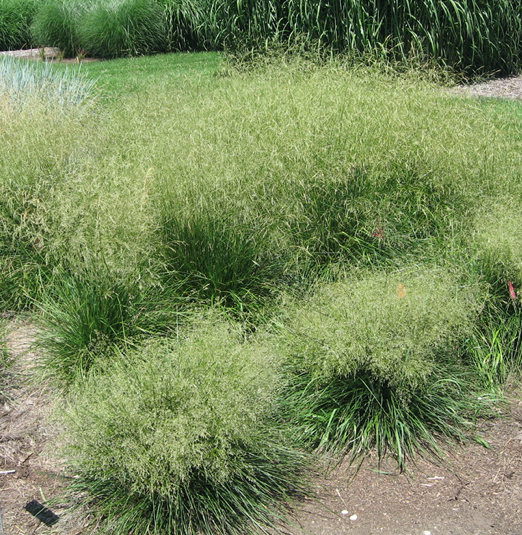
Tufted hair grass is a clump forming, cool season grass. Excellent massed in woodland gardens or naturalized areas where the ethereal summer bloom produces a delicate cloud of subtle colors hovering above the foliage. Also effective as a specimen or in groups in shaded areas of borders, large rock gardens or moist areas along ponds or streams. Mixes well with shade loving perennials such as ferns and hostas.
This grass may remain semi-evergreen through winter in milder climates, and can act as winter interest. In milder climates, cut back in early spring before new growth begins. In cooler climates, the grass can be cut down in late autumn or early spring. This compact grass is known as Deschampsia cespitosa ‘Northern Lights’.
Not to be combined with or used in conjunction with any other offer or discount for the same service. Deschampsia cespitosa ‘Bronze Veil’ is a species that is lovely in the border, especially when mass planted. The plants form a low mound of dark green leaves with upright stems bearing tiny, airy flowers in a bronze-green shade that matures to beige. Its effect is light and billowing, which is a delightful contrast to many heavier plants in a garden bed.
Its variegated green leaves are accompanied in the spring by new growth emerging as a rosy pink that eventually fades to white. During the summer season, neutral-colored flowers emerge adding additional interest to this herbaceous grass. You can expect its foliage to return to a charming rosy pink as the weather begins to cool in the fall. With a moderate growth rate, this plant will reach an average mature landscape size of 1′ wide by 1′ tall. Northern Lights Tufted Hairgrass (Deschampsia caespitosa) is one of the prettiest cool-season ornamental grasses.
Tufted hairgrass is used as forage for ruminants and grazing animals. It is also food for smaller animals and birds, and makes a good habitat for the same. The plant is also useful as a barrier to erosion and a reclamation species for overgrazed, heavily mined, and disturbed natural sites. The plant's resistance to toxins makes growing tufted hairgrass useful for reintroducing plant life.
Now that you know it exists, what is tufted hairgrass (Deschampsia cespitosa)? It's an elegant ornamental tussock form that grows in mound-shaped clumps. Borders or containers are excellent tussock grass uses. This cool-season perennial plant produces flowers from June until September. The plant is 2 to 4 feet (0.5 to 1 m.) tall with a similar spread. The flowers are feather panicles with hairy seed heads and may be brown, green, or gold, depending upon the cultivar.